

Describe behaviour before choosing the feeder
Two materials with the same target bag weight can need different feeding arrangements. Record particle size and shape, moisture, bulk density and what happens after storage. Include changes between batches, not just the easiest material to run.
Powders can be cohesive, bridge across an outlet or flow rapidly when aerated. Granules may flow freely, but fragile particles or a wide size distribution bring damage and segregation concerns. Irregular material can lodge, stick or feed unevenly. These behaviours can overlap: the material name is not a reliable feeding rule.
Coperion's feeding guidance describes how particle properties, density and cohesion affect dry-bulk flow. Its principles help frame the material review; its feeder designs and process performance are specific to Coperion.
Compare gravity, screw and belt feeding
Gravity feeding controls discharge from an outlet, usually with a gate. It is an option to evaluate when material can flow consistently under its own weight. Ask whether the arrangement can limit surges and stop flow at the required point.
Screw feeding moves material with a rotating screw. It offers a metering approach to investigate, but the hopper must still deliver material to the screw. Suitability depends on the product, screw arrangement and response to handling; a powder label alone does not settle the choice.
Belt feeding carries material toward discharge on a moving belt. It can be worth evaluating for irregular material or where gentle transfer matters. Check pickup consistency and whether the material sticks during discharge.
ECC's bagging-feeder comparison introduces these three principles. Treat them as engineering options to test, rather than fixed powder-to-screw, granule-to-gravity or irregular-to-belt rules.
Connect material flow to weighing and shutoff
The target weight defines how much material is needed; the flow rate determines how quickly it reaches the weighing stage. Bulk density changes the volume handled at that weight. Ask how the proposed setup handles density variation and how much material can remain in transit after the feed command stops.
Premier Tech's bagging-scale documentation shows different feeders connected to a weighing system. Confirm both the feeding principle and the weighing arrangement in your proposal.
Agree the weighing arrangement and how feeding changes as the target approaches. Ask the supplier to explain starting, metering and shutoff with your material, including recovery after a supply pause. Request the conditions and results behind any proposed weight tolerance.
Dustiness affects the discharge connection and displaced-air route. Share containment, hygiene or static-related project requirements for assessment. These requirements need a defined equipment and documentation scope; a material category does not establish compliance.
Include the upstream source and the complete cycle
Describe what supplies the feeder: a storage hopper, conveyor or intermittent process. Provide the outlet arrangement and tell the supplier whether material arrives steadily, in batches or with entrained air. A trial with a full, continuously supplied hopper may miss interruptions found in your plant.
Ask how refill, low material level and restart affect feed consistency. Then place the feeding step inside the whole bagging sequence: bag placement, filling, closing and transfer. Faster material delivery is useful only if the next steps can accept it. For those interfaces, use the complete bagging and palletizing line planning guide.
Use material behaviour to narrow the trial
This table identifies questions for the supplier. It does not select a machine without examining the product.
| Material behaviour | Typical concern | Feeding principle to evaluate | Questions buyer should provide |
|---|---|---|---|
| Flows freely through the outlet | Surge flow or material continuing after shutoff | Controlled gravity discharge; compare other metering if finer control is needed | Does flow change with hopper level? What happens near the target weight? |
| Cohesive powder or material that bridges | An uneven stream, blockage or sudden release | Screw metering with a suitable hopper and flow assistance, where needed | Does it cake after storage? Can a representative sample show the problem? |
| Fine powder that flows when aerated | Flooding, displaced air and dust at transfer | A feeder and shutoff arrangement evaluated for aerated flow | How does the upstream process introduce air? How will venting and containment connect? |
| Fragile granules or mixed particle sizes | Breakage, fines or segregation during handling | Gentle gravity, screw or belt transfer, subject to trials | What damage is unacceptable? Does the discharged sample keep the required condition? |
| Irregular, bulky or sticky particles | Inconsistent pickup, lodging or material sticking to surfaces | Belt feeding or another arrangement checked against the actual particles | Share photos, size variation and sticking behaviour; how does it discharge after storage? |
Keep the equipment proposal specific
Wisdom's bagging equipment page covers automatic, semi-automatic, valve-bag and bulk-bag configurations. Confirm the actual feeder and material compatibility in the proposed scope. Feeding control and automatic bag placement are separate decisions.
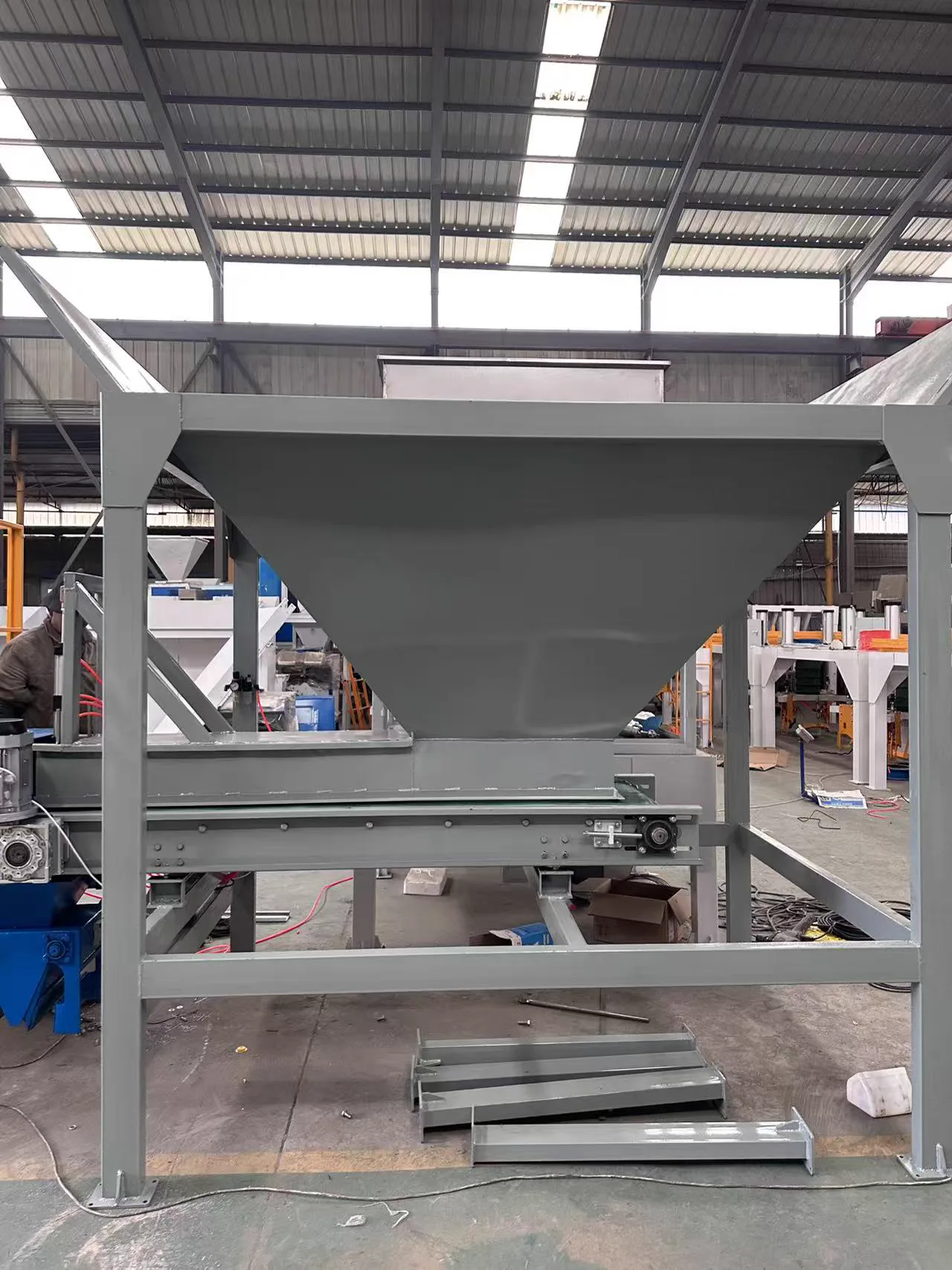
The open-mouth bagging selection guide covers bag compatibility, placement and closing. Keep this feeder review focused on receiving and controlling the material, then carry the result into that wider configuration.
Prepare a useful material trial
For the first contact, send the material, photos or sample information, target bag weight and target throughput. The following details can be added during the review:
- Identify normal and difficult batches, storage conditions and any known bridging, sticking or aeration.
- Describe upstream supply and agree a representative sample, bag and test sequence.
- State acceptable product condition after filling, including any concern about breakage, fines or segregation.
- Ask for observations of feed consistency, weight results and the complete cycle, with interruptions included.
- Have the proposal name the feeder, weighing method, containment interfaces and operator tasks that were evaluated.
Sources
These references explain material behaviour and feeding principles. Their particular feeder designs and performance figures are not specifications for a Wisdom configuration.
- Coperion: Feeding Technology (material characteristics and feeder selection).
- ECC: Gravity Feed vs Auger Feed vs Belt Feed Bagging Systems Explained (bagging feed principles).
- Premier Tech CHRONOS: Bagging Scale / Net Weigh Scale (feeding and weighing as related configuration choices).
Discuss the material before the machine.
Start with your material, photos or sample information, target bag weight and target throughput. WISDOM can review the inputs with you and identify the configuration and trial conditions to confirm.
Talk to WISDOM