

Describe how the material behaves
Start with a representative material sample and how it reaches the bagger. Describe particle condition, moisture, dust, tendency to bridge or cling, and any changes between batches. The commercial material name is useful, but it does not tell you whether the product flows consistently through a hopper.
Check the supply above the weighing and filling equipment as well. Intermittent discharge or an unstable material supply can affect the bagging sequence. Ask which flow and handling questions require a material trial rather than assuming that a machine used for a similarly named product will fit.
Confirm the bag and target weight
An open-mouth bag is filled through its open top and then closed. Send an actual bag or a clear sample description, including its dimensions, construction and any liner. Confirm the required filled weight and how the filled bag should stand or travel after release.
Bag dimensions and target weight must be considered together. Check room for the material, the closing area and any settling needed before closure. Do not select equipment solely from a nominal bag-weight range: the bag opening, support and discharge arrangement also have to fit.
Select feeding by behavior, not a fixed rule
Gravity feeding
Gravity feeding can be a candidate when material flows freely and controllably. Review how the flow is started, reduced and stopped, and what happens as the supply level changes. A free-flowing granule is a starting point for discussion, not automatic proof that gravity feeding is suitable.
Screw or auger feeding
A screw can meter material toward the weighing or filling point. It is an option to investigate for some powders, but powders differ in flow, aeration and compaction. Ask whether the proposed arrangement suits the actual sample and how retained material and cleaning will be handled.
Belt feeding
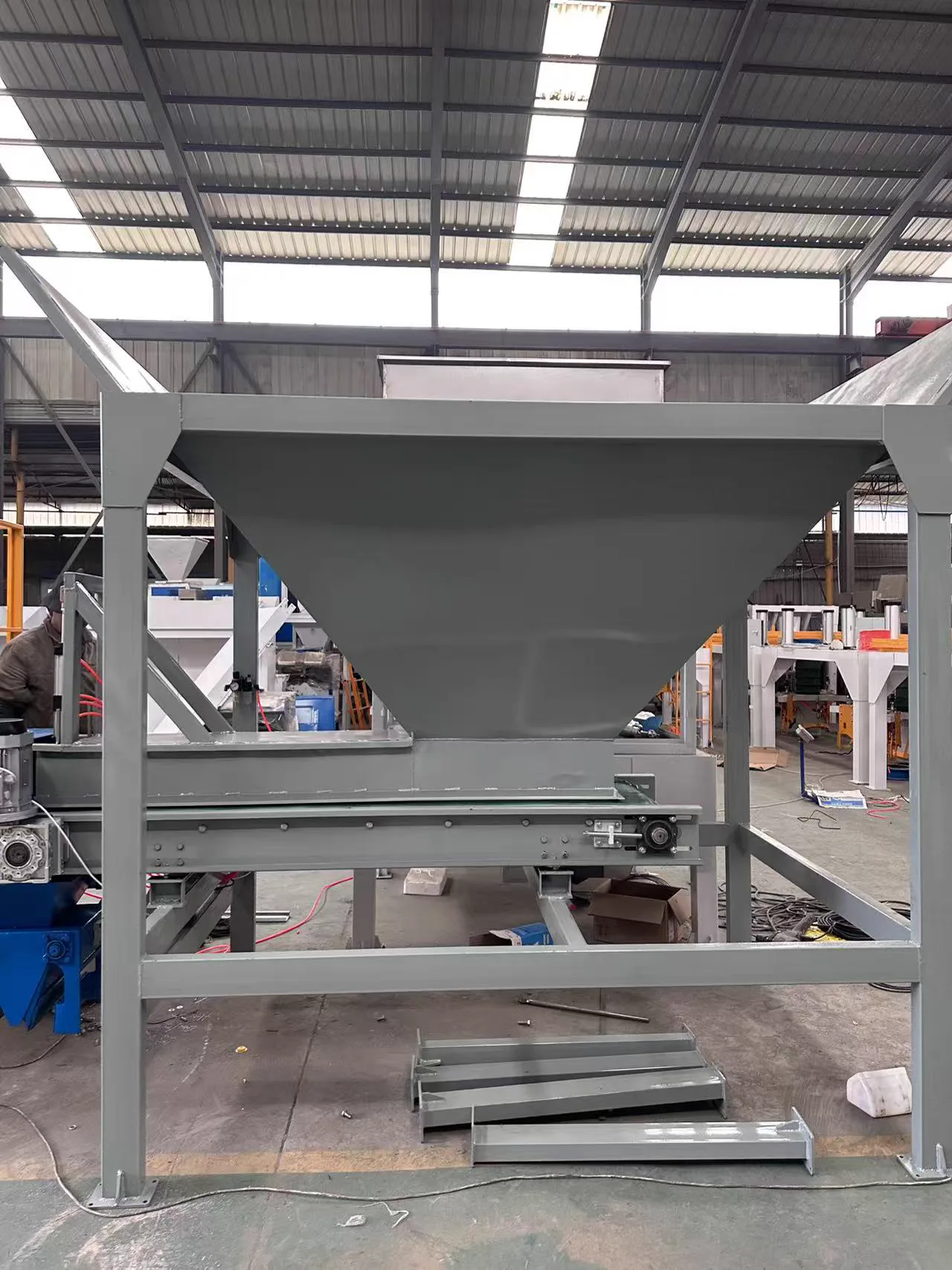
A belt can be considered for materials whose handling is difficult through another feeding route, including some irregular or poor-flow materials. Wet or sticky product still needs an assessment of build-up, discharge and cleaning. “Difficult-flow” does not mean that every belt configuration will work.
Decide who places the empty bag
In a semi-automatic arrangement, an operator places the bag while weighing and filling can be machine-controlled. In an automatic arrangement, compatible bag-handling equipment can take over bag picking, opening and placing. This choice does not determine the feeding method.
Review bag consistency, replenishment and changeovers before choosing automatic handling. Ask which operations still need an operator, including clearing an incorrectly presented bag. The automatic versus semi-automatic guide helps define the boundary without assuming a fixed staffing or output advantage.
Agree closing before the filler is finalized
Sewing is a closing option to discuss with Wisdom for a suitable bag. Confirm the bag construction, mouth preparation, support and transfer into the sewing equipment. Do not assume that the closing module is included simply because a quotation describes an automatic bagger.
If the bag requires a different closure, provide that requirement for confirmation rather than treating it as an available standard configuration. Agree the required finished-bag condition and the demonstration or inspection needed to check it. The bagger, closing equipment and conveyor must work as a sequence.
For the closing method itself, see the sewing vs heat-sealing selection guide.
Plan the route to the pallet
After filling, check conveyor height, bag stability, orientation and the handover into closing. Then confirm how a closed bag reaches palletizing. A bag that transfers acceptably at one point may still need preparation or orientation before it can be stacked.
Review palletizing systems if pallet handling is part of the project. For a connected scope, use the complete-line page to discuss module interfaces, controls and the available layout together. Keep access for replenishment, cleaning and maintenance in that layout.
Send a compact selection brief
- Material: sample, flow behavior, moisture and dust considerations.
- Bag: actual empty bag, dimensions, construction and liner.
- Bag weight: target filled weight and any planned changes.
- Required output: production requirement and upstream supply pattern.
- Electrical supply: the supply available at the installation site.
- Available layout: equipment space, transfer points and operator access.
These inputs start the discussion; they are not a complete machine specification. Ask Wisdom to confirm the proposed feeding, bag placing and closing scope, identify unresolved material or bag tests, and state the interfaces included in the recommendation.
Discuss your configuration.
Review bagging configurations and complete-line integration, then share your material, bag and output requirements with Wisdom.
Talk to Wisdom